Monocrystalline PV Modules
Mainstream 182/210 large-format modules with fragile glass surfaces — require vertical placement plus pallet / wooden crate reinforcement.
International solar panel shipping is a specialized logistics service that transports solar modules (monocrystalline / polycrystalline panels) and their accessories, in breakage-proof and moisture-proof standard packing, safely to power plants and distribution warehouses worldwide by FCL, LCL or breakbulk vessel.
With 15 years of focus on new-energy logistics and a leading monthly PV module shipment volume, HUIN International Logistics is well-versed in ISPM15 fumigated packing, HS 8541 classification and anti-dumping / tariff verification, offering one-stop services covering breakage-proof reinforcement, DDP door-to-door delivery and port-to-door breakage insurance.
From single-module samples to GW-scale power plant project cargo, we cover the full range of PV products. Not sure about classification or packing? Send us your cargo details for a free assessment.
PV modules are not dangerous goods, but classification, origin and destination trade barriers determine whether customs clearance goes smoothly — verifying these in advance avoids port detention and heavy duties.
| Document | Applicable Cargo | Processing Time | Validity | HUIN Service |
|---|---|---|---|---|
| HS Code Classification (8541.43) | All PV modules / accessories | 1–2 business days | Per shipment | Expert Classification |
| Certificate of Origin (CO / Form E / RCEP) | For destinations with preferential tariff rates | 1–3 business days | Per shipment | Full Service |
| Anti-Dumping / Tariff Verification Report | Exports to the US, EU, India, Turkey, etc. | 2–5 business days | Updated with policy | Rate Calculation |
| ISPM15 Fumigation Certificate / Wood Packing Declaration | Packed cargo on solid-wood pallets | 1–2 business days | Per shipment | Partnered Pallet Suppliers |
| Battery Accessory Compliance (if with micro storage) | PV systems with energy-storage batteries | 7–15 business days | Per model | UN38.3 Service |
Choose between FCL, LCL and breakbulk based on volume, project milestones and destination — LCL saves money on small lots; FCL / breakbulk is steadier for power plant projects.
| Shipping Mode | Applicable Cargo | Transit Time | Cost | Key Advantages | Limitations |
|---|---|---|---|---|---|
| FCL
20/40ft containers |
Bulk modules (approx. 350–900 per container) | China → Europe 28–38 days | ★★☆★★ | Breakage well controlled, lowest cost per pallet | Volume must fill a container |
| LCL
Shared space |
Small lots of modules, inverter parts, samples | FCL transit +3–7 days | ★★☆☆★ | Low volume threshold, flexible | Requires breakage-proof isolation, higher LCL fees |
| Breakbulk
Project / deck cargo |
GW-scale plant modules + complete racking sets | Africa / Middle East 35–50 days | ★★☆★★ | Complete project shipped at once | Few sailings, book well in advance |
| Air Freight
Samples / urgent |
Module samples, certification test units | 3–7 days | ★★★★★ | Fastest, lowest breakage risk | Very costly, small quantities only |
From inquiry and assessment through to power plant delivery — breakage-proof packing, container reinforcement, customs and tariffs are all handled for you.
Submit module type / wattage / quantity / destination port; we determine HS classification and packing grade free of charge and issue a plan and quote.
Confirm pallet / wooden crate packing grade and moisture- and breakage-proof measures; arrange ISPM15 fumigation if required.
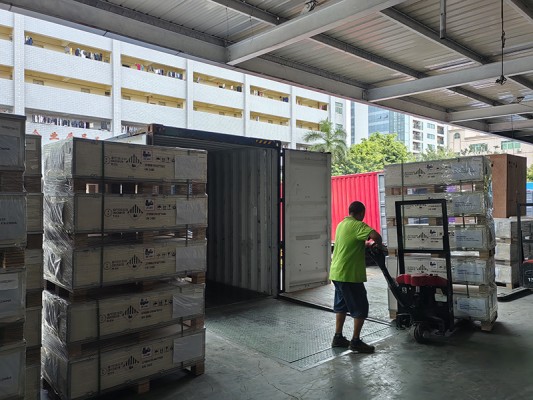
Book FCL / LCL space; supervised loading throughout, with modules placed vertically and secured by lashing.
Prepare certificate of origin and customs documents; verify anti-dumping rates; obtain the bill of lading after release.
Real-time vessel tracking, monitoring of adverse weather and hold temperature / humidity — fully transparent and controlled.
Destination-port customs clearance, duty payment on your behalf (optional DDP), unpacking and inspection, delivery to the power plant / warehouse.
Every shipment is verifiable — transparent cargo specs, routes, container types, lead times, key challenges, and results.
Solar modules have a glass-and-silicon structure; vertical placement plus moisture and UV protection are the core requirements — the standards below are based on module manufacturers' packing guidelines and ocean-shipping experience.
Modules must be stacked vertically (leaning); lying flat puts pressure on the glass and causes breakage. Orientation is checked pallet by pallet during loading.
Standard 2- or 3-pallet plus carton packing with corner protection on all four corners; solid-wood pallets require ISPM15 fumigation.
Whole pallets wrapped in PE moisture-barrier film with desiccants inside, protecting junction boxes from ocean salt mist and condensation.
For prolonged deck / yard storage, add sun-shade cloth to prevent module overheating and UV aging.
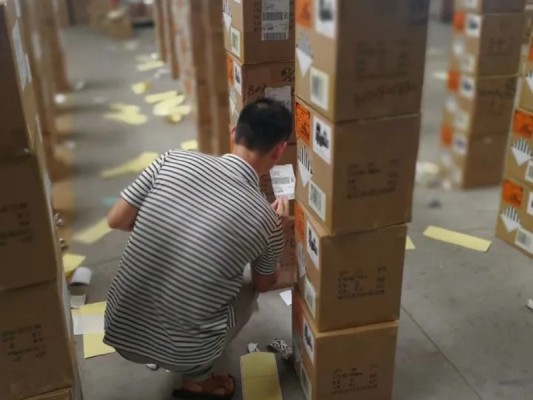
Fragile / this-side-up / keep-dry labels on every pallet; photo records taken before loading to clarify liability boundaries.
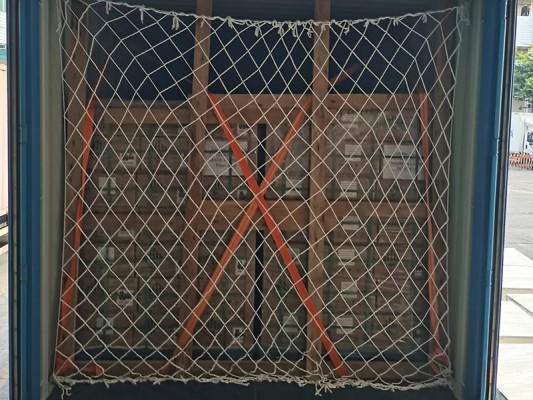
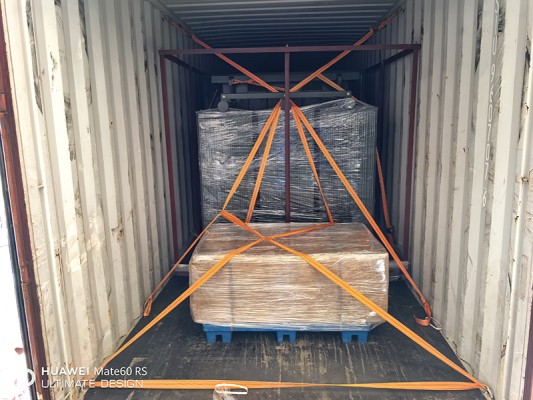
Pallets fixed with lashing straps and blocking boards between rows to prevent tipping and shifting in transit; gaps filled with airbags.
Qualifications, shipping modes, battery control, destination market access — 8 high-frequency questions answered at once.
HUIN's dedicated consultant will reply to you as soon as possible after receiving your message.